March 2026
Here is the latest from our farm team at Mount Vets. If you would like any further advice or would like us to cover something in the next newsletter, please call us on 01823 663384 or contact us here.
We want to hear your feedback… Leave us a review!
We value your feedback and comments and would appreciate if you could take the time to leave us a review! Please follow the link to share your thoughts.
Jejunal Haemorrhage Syndrome (JHS) in Cattle
Written by Amy Birch
What is it?
Jejunal haemorrhage syndrome (JHS) is characterized by severe bleeding into the jejunum (which is the middle section of the small intestine). This causes significant blood loss (anaemia) and, if the blood has clotted, an obstruction in the intestine which prevents the gut contents from moving through. Affected animals often look depressed, show signs of abdominal pain (teeth grinding; kicking at abdomen), are inappetent, have reduced faecal output, and have a rapid milk drop. Examination usually reveals a high heart rate, normal or low temperature, and a right sided ‘ping’ and ‘tinkle’ when we listen to the right side of the abdomen with our stethoscope. On rectal exam, we might feel distended loops of small intestine, although we don’t always feel this even in cases where the blood has clotted and caused an obstruction.
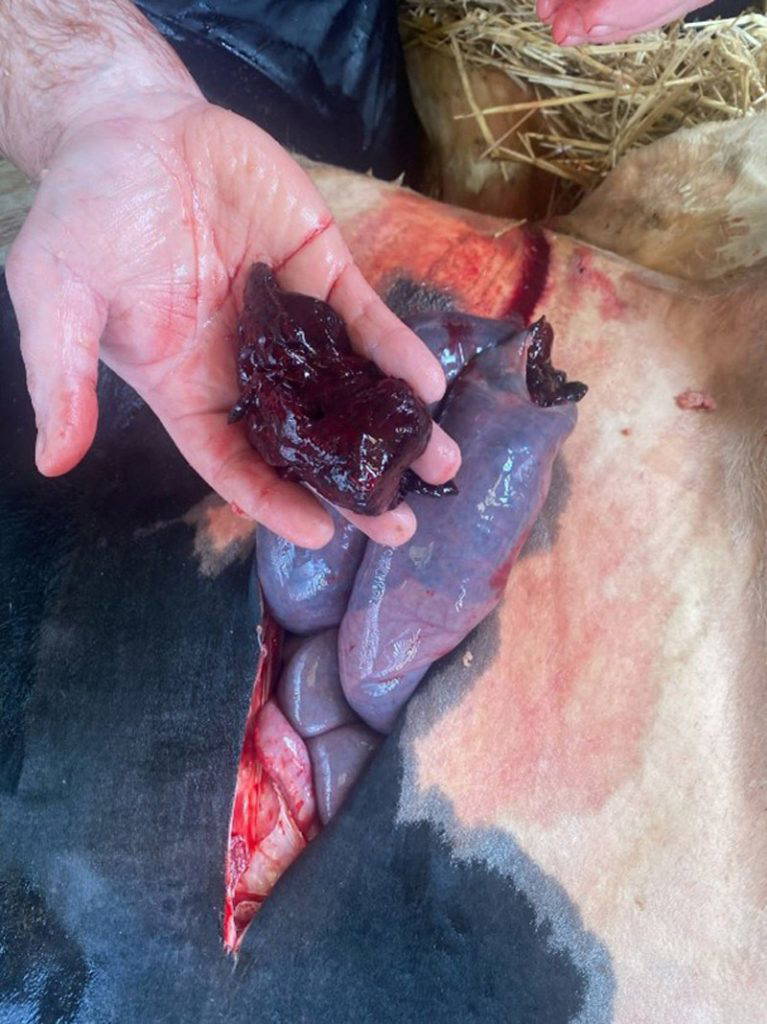
Surgically removing the blood clots from the abdomen
When do we see it?
It is an uncommon but often fatal disease of adult dairy cows and is only very occasionally seen in beef or male animals. It is usually the high producing cows that are affected and the cause of the disease is unknown, however there is a possible link to clostridial bacteria and possibly to the starch content in their ration.
Treatment options:
Medical management (fluids, antibiotics, etc.) is unlikely to be helpful due to the severity and nature of the disease. JHS can’t be definitively diagnosed other than during surgical exploration of the abdomen, or on post-mortem exam, thus if a cow is unwell and has a ‘right-sided ping’ surgical exploration of the abdomen is usually recommended. Surgical treatment involves entering the abdomen to either break up the blood clots that are causing an obstruction by massaging the intestines, or by making a cut into the intestine to remove the clots. Even with prompt surgery the mortality rate is relatively high, however other causes of right-sided abdominal issues may carry a better prognosis post-surgery, so it’s often still recommended to perform surgical exploration.
Prevention:
Vaccinating against clostridial disease (e.g. Bravoxin) may help prevent JHS, however the link between JHS and clostridial bacteria has not been proven. Regardless, Bravoxin vaccine protects against many diseases which are almost impossible to treat and may present as sudden death, including tetanus and blackleg, so it is a useful vaccine to consider. As JHS is usually only seen sporadically in herds an isolated case doesn’t necessarily indicate a group-wide feeding issue, however if you are seeing other signs of gut disease in cows in the same group, it may be an indicator to reassess their ration.
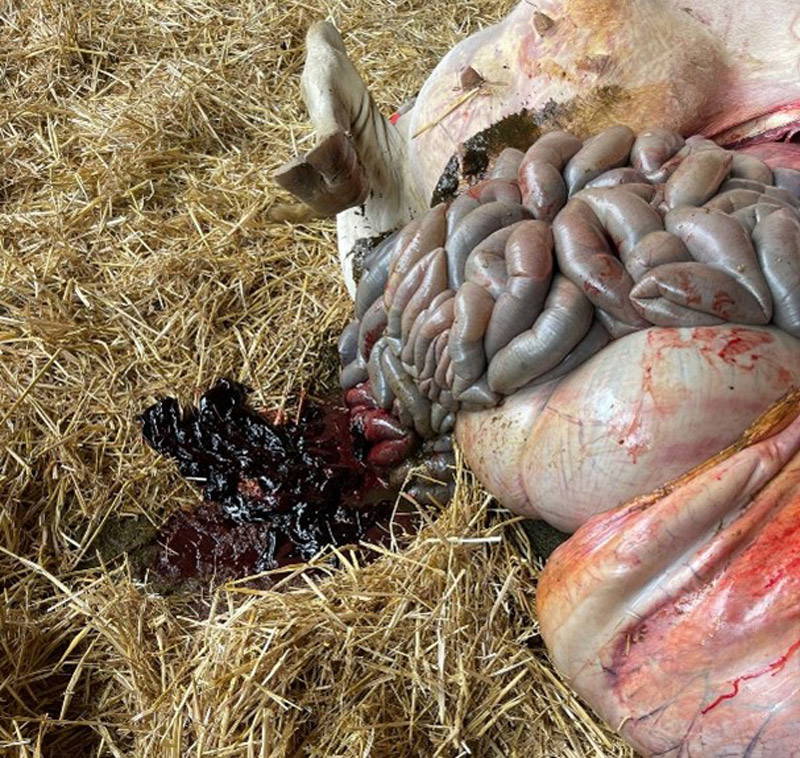
Post-mortem of a cow that died due to JHS – the jejunum has been opened to show the blood clots
When do we see it?
It is an uncommon but often fatal disease of adult dairy cows and is only very occasionally seen in beef or male animals. It is usually the high producing cows that are affected and the cause of the disease is unknown, however there is a possible link to clostridial bacteria and possibly to the starch content in their ration.
Treatment options:
Medical management (fluids, antibiotics, etc.) is unlikely to be helpful due to the severity and nature of the disease. JHS can’t be definitively diagnosed other than during surgical exploration of the abdomen, or on post-mortem exam, thus if a cow is unwell and has a ‘right-sided ping’ surgical exploration of the abdomen is usually recommended. Surgical treatment involves entering the abdomen to either break up the blood clots that are causing an obstruction by massaging the intestines, or by making a cut into the intestine to remove the clots. Even with prompt surgery the mortality rate is relatively high, however other causes of right-sided abdominal issues may carry a better prognosis post-surgery, so it’s often still recommended to perform surgical exploration.
Prevention:
Vaccinating against clostridial disease (e.g. Bravoxin) may help prevent JHS, however the link between JHS and clostridial bacteria has not been proven. Regardless, Bravoxin vaccine protects against many diseases which are almost impossible to treat and may present as sudden death, including tetanus and blackleg, so it is a useful vaccine to consider. As JHS is usually only seen sporadically in herds an isolated case doesn’t necessarily indicate a group-wide feeding issue, however if you are seeing other signs of gut disease in cows in the same group, it may be an indicator to reassess their ration.
Post-mortem of a cow that died due to JHS – the jejunum has been opened to show the blood clots
Effective Disinfection Protocols for Cryptosporidum in Calf Housing
Cryptosporidium Parvum (Crypto) is a common problem causing scour and ill thrift in calves. The Crypto eggs (oocysts) have a thick shell which makes it difficult to clear them from the environment. Recent research at The Moredun Research Foundation has shown that many of the usual farm disinfectants are not effective against Cryptosporidium when used at the manufacturers recommended concentration. In comparative trials Hydrogen Peroxide based disinfectants were the most efficient at killing the Crypto Oocysts. This type of disinfectant also has the advantage of breaking down into the harmless byproducts water and oxygen when it is released into the environment. The practice is now stocking one of this type of disinfectants – Endosan 50.
In order to maximise the efficacy of any disinfectant against Crypto we recommend the following protocol;
- Remove any visible bedding / debris / dung from the calf pen.
- Steam clean all surfaces, including gates and feeders.
- Using a detergent spray will remove any fatty biofilm or organic deposits that may have built up.
- When the pen is clean and dry, then spray all surfaces with disinfectant. Endosan should be applied at a concentration of 3%. This means that Endosan 50 should be diluted with 15 parts water before use. A safety data sheet will be issued with each tub. Please ensure that you read and follow the guidelines regarding protective clothing, eye protection and respiratory protection.
- After disinfection the pen should be left to dry out and be exposed to light for as long as possible before restocking as this will help to kill off any remaining oocysts.
If you have any queries about the diagnosis and control of Crypto, or the use of Endosan disinfectant then please call the practice and speak with one of the vets.
Mount Vets Lambing Course
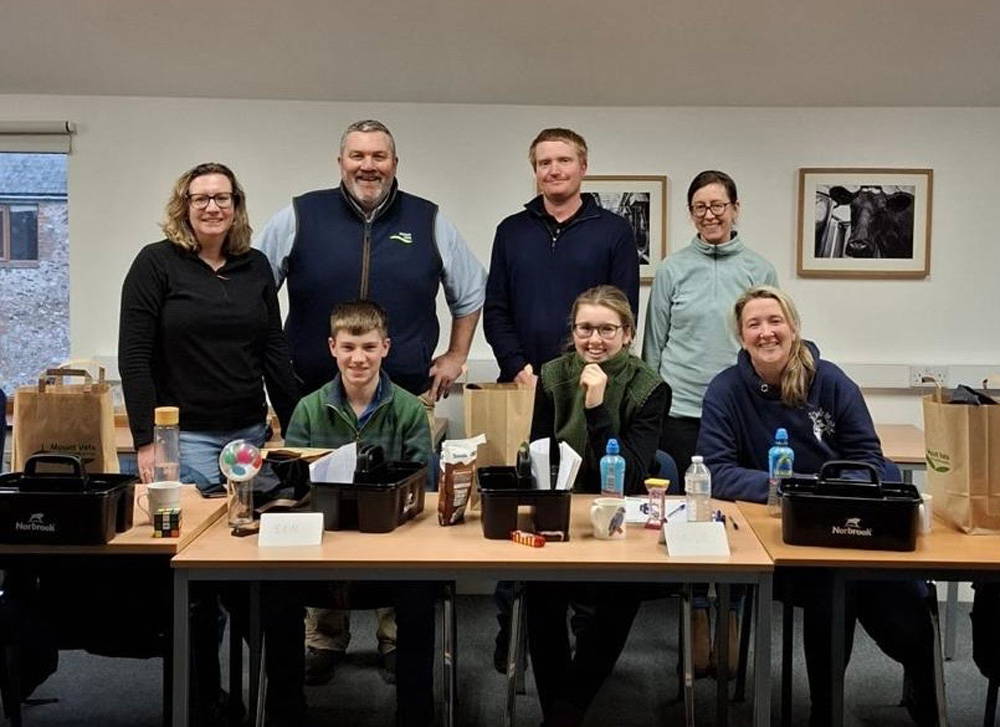
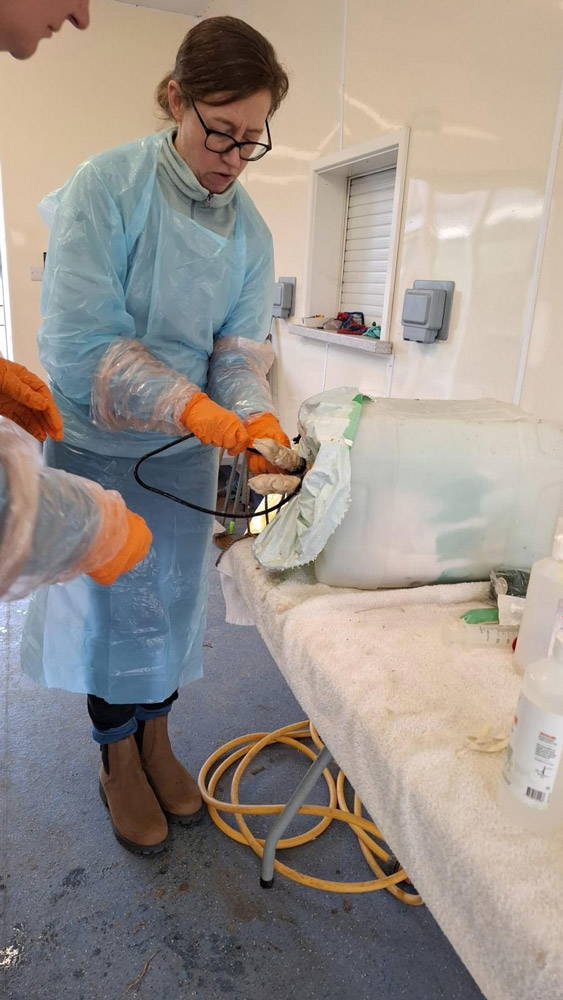
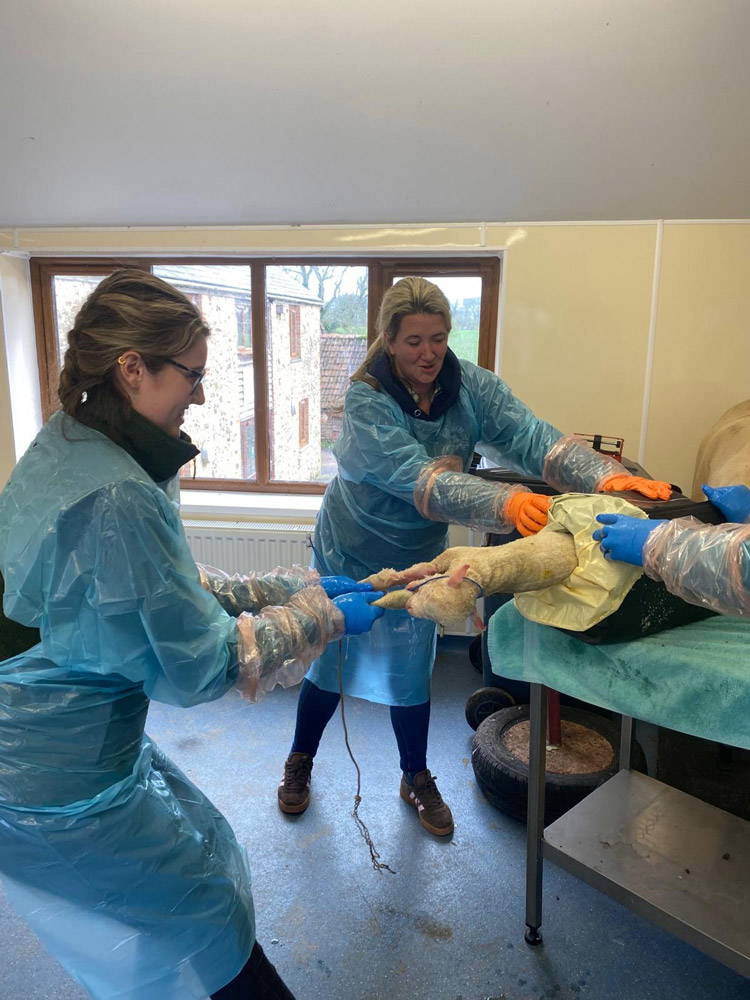
We ran another successful lambing course in February. The course is run by our experienced vet David. This course is open to everyone who feels they would like to be better equipped for lambing season. The course covers a mix of theory and practical knowledge: Preparation for lambing, as well as key practical skills, such as correcting basic lambing presentations, colostrum provision, stomach tubing, castration, and tailing. We usually run two lambing courses a year. If you would like to find out more give us a call: 01823 663384.
Thank you to those who joined us! We had some great feedback: ‘I found the course excellent! Really informative, a perfect pace and great practical elements. The environment was very welcoming and interactive with interesting discursive elements throughout the day, I would highly recommend it to others!’
Upcoming courses
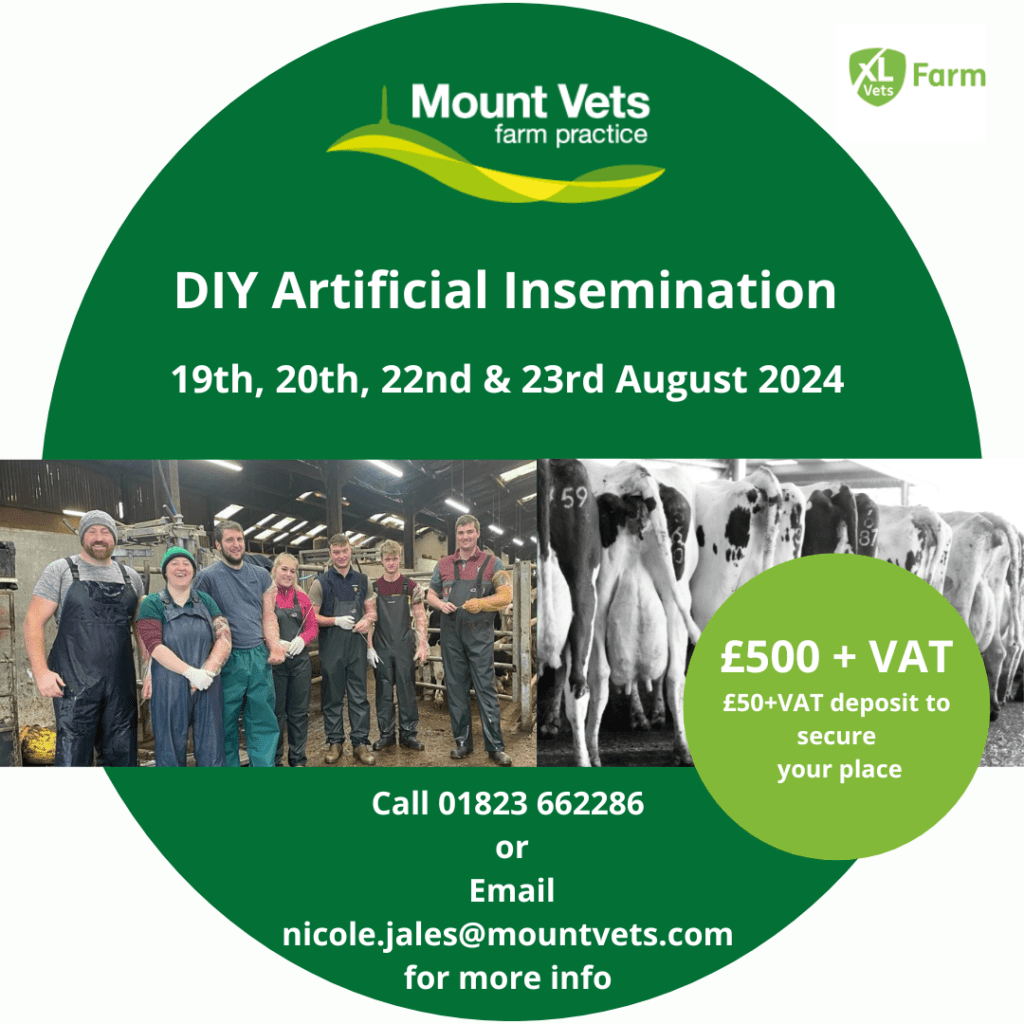
DIY Articial Insemiation Course
Our next 4-day DIY AI course will run on 19th, 20th, 22nd & 23rd August 2024.
This DEFRA approved course is aimed at anyone who has no previous experience in the artificial insemination of cows.
The 4-day course is run by our experienced farm vet Rob Mangham and is full of theory and practical sessions to make sure you leave feeling confident and safe in all aspects of AI.
The cost of the course is £500 + VAT, with a £50+VAT deposit to secure your space.
(Deposit will be taken off final amount)
Please ring the practice to book your place on any of our courses on 01823 663384 or email farm@mountvets.com
Meet the Team!
We have an experienced & friendly team here at Mount Vets. You might already recognise a few faces but over the next few months we will reintroduce you to some of our excellent team. To read more and see more of the faces of Mount Vets visit our team page, and be sure to follow us on Instagram and Facebook.
Piers Pepperell
Director
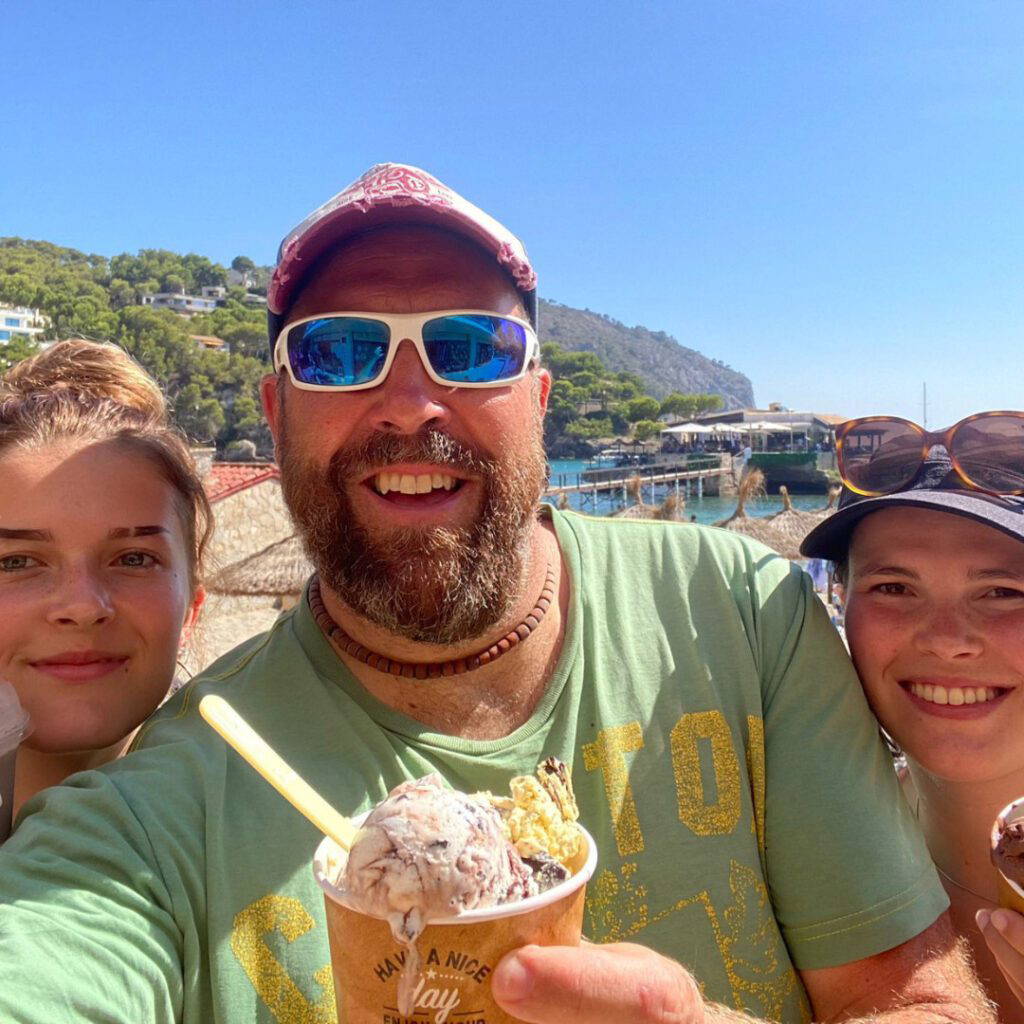
Many of you will already know our Mount Vets Director Piers; but did you know he has appeared on tv show Blind Date with Cilla Black?
Piers loves to spend a free day with his two daughters and three dogs, surfing on the North Devon Coast.
His favourite vet call out was when he was called into the waiting room and unknown to him at the time, but he then met his wife to be. She had brought in her eight baby bunny rabbits, which led on naturally to a 10-minute chat about pig wormers and her asking Piers out on a date.
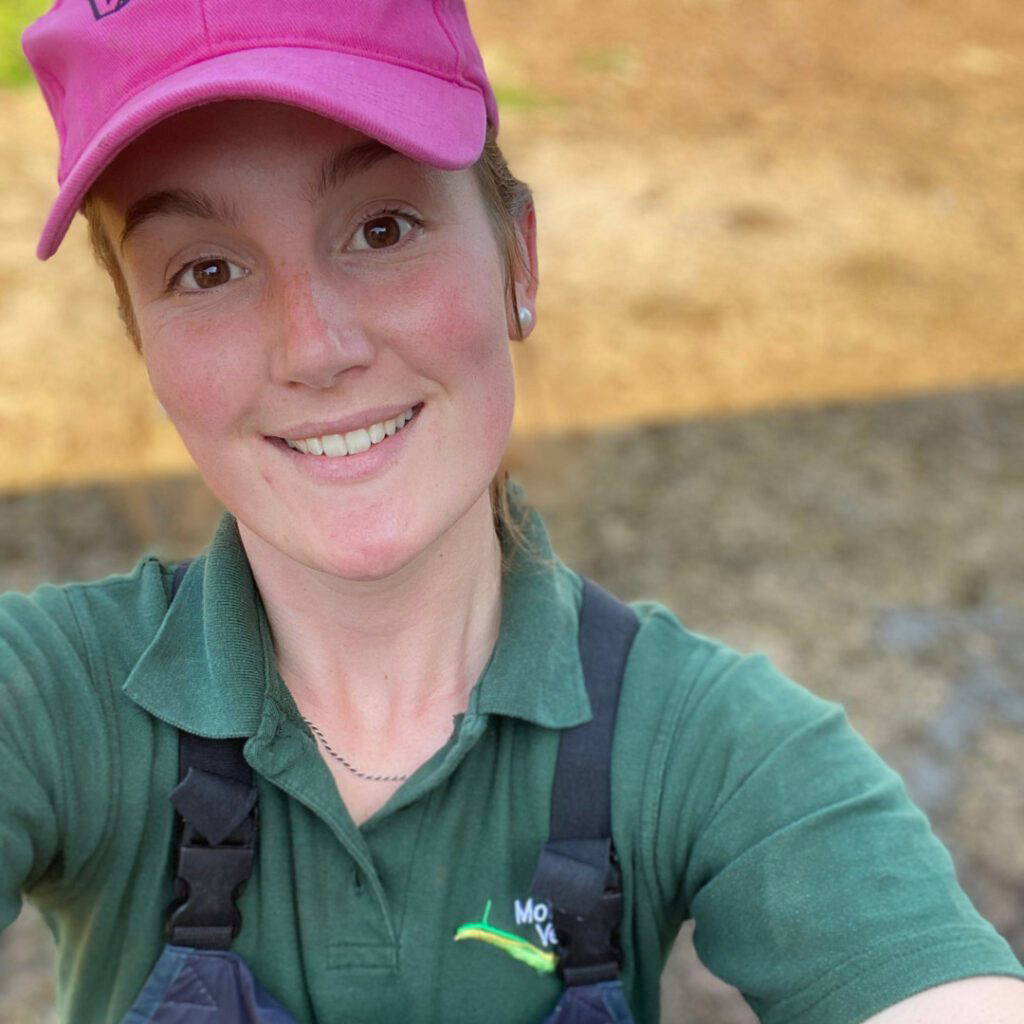
Pip White
Vet
Pip is one of our large animal vets. If you’ve met her, you will probably know how much she loves her cows. So much so, that she loves to spend her free time at home with her cows! That, or in the showring showing them. 🐮
Pip graduated as top student in her year from the University of Surrey.
Her favourite song is Mr Brightside by the Killers.
Have a question about any of the topics covered in this newsletter?
If you need any assistance with the topics covered in this newsletter, please do not hesitate to get in touch with our experienced farm vets who will be able to help. Call 01823 663384, or contact us here.