September 2022
Here is the latest from our farm team at Mount Vets. If you would like any further advice or would like us to cover something in the next newsletter, please call us on 01823 663384 or contact us here.
We want to hear your feedback… Leave us a review!
Our new website is now live. We hope you enjoy an easier navigation through the pages and have had the opportunity to look at the new information that we have added. We value your feedback and comments and would appreciate if you could take the time to leave us a review! Please follow the link to share your thoughts. https://g.page/r/CTSyP_UXvSPIEAI/reviewBVD Reminder
We have recently diagnosed BVD outbreaks on several farms within the practice so we thought it would be a good opportunity to review and reiterate our advice regarding BVD control.
Biosecurity
Good biosecurity is the mainstay of BVD control. Stopping BVD from getting into the herd in the first place is the best defence we have. The main two routes of transmission are either through the purchase of infected animals or via contact with neighbouring stock that is infected with BVD.
Our advice is to limit the number of animals bought onto farm wherever possible. When animals are bought in, it is important to research their history (i.e., buy from BVD free herds), isolate them from homebred animals and test them for infectious diseases whilst in isolation. This is especially important when buying bulls as they can shed BVD virus in their semen for up to 10 weeks after infection.
Keeping fences in good condition, ideally with a 3-meter gap, is an important component of BVD control. Knowing what stock is in your neighbour’s field is also helpful, for example: it may not be a good idea to put bulling heifer in a field next to your neighbour’s bull.
How do we monitor and protect against BVD?
Monitoring
Regular monitoring for BVD allows us to identify when BVD has entered a herd as soon as possible. For dairy herds we can use a combination of bulk milk testing and youngstock blood screening to monitor the herds status. For beef herds, we are reliant on youngstock blood screening although some of our beef herds are using the BVD tags as standard which is a great idea.
Protection
If BVD does make its way into a herd, ideally, we would like there to be immunity already in place to protect the homebred animals. We can achieve this through vaccination of the breeding animals on farm. This includes bulls and any animals that may be served in the next 12 months.
For further advice regarding BVD control, please do contact us at the practice!
Parasites
Fly Strike
Now that the summer has officially ended and we have finally had a good amount of rain, we still need to be vigilant with our parasite control on farm.
Just last week we saw a case of flystrike in a spring born lamb. Luckily, this case was caught quickly, and the affected lamb was treated rapidly with Crovect which is licenced to put directly on areas of strike. The lamb also received a dose of antibiotics and pain relief. Any sheep that are off colour, not eating or generally looking miserable should be checked for signs of fly strike. These signs include patches of discoloured wool, agitation & nibbling at affected areas, tissue decay, and occasionally death.
Gut Worms
We are also regularly seeing animals affected with gut worms, and with our changing climate, the traditional parasite windows are also changing. If there are any groups of animals that are scouring or poor doing, then please drop in a dung sample that we can examine for the presence gut worms and an effective treatment plan can be put in place.
Fluke
With housing just around the corner, the yearly treatment for fluke will be front and centre in people’s minds. But a question we should ask ourselves is, do my cattle need to be treated for fluke?
Testing for fluke involves sending off a pooled sample from 10 individuals to our lab who can tell us if there are fluke present and also if there are adult fluke present which may change our treatment plans.
If testing your cattle for the presence of fluke is something that interests you, please give us a ring at the practice. Hopefully, we can find some cattle that do not actually need any treatment this year and therefore save you an extra cost at a time when all of us are feeling the pinch.
Upcoming courses
BE A BETTER HERDSPERSON COURSE
BEGINS 21st SEPTEMBER 2022
Are you a young farmer or farm worker with a growing interest in dairy cows?
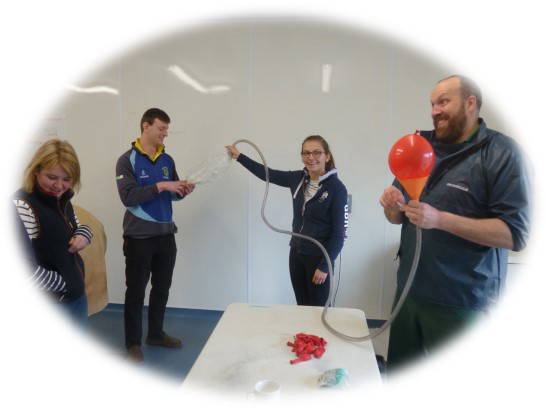
This course has been designed for those who are keen to improve their ability to assist in the health management of a modern dairy herd. It is very much a” hands on” course and sets out to increase understanding of the cow & her environment, show best practice, common pitfalls and aims to teach skills that can be used by anyone on a daily basis to help improve cow health and performance.
The course consists of six modules run between 11am & 3:30pm, once a week, every Wednesday (except for one week, which will run on Thursday 13th October)We even provide drinks, snacks, and lunch!
Modules include:
- Calving & Newborn
- Calves & Youngstock
- Milking & Mastitis
- Improving Fertility
- Nutrition
- Lameness & Housing
This course will cost £200 for YFC age. The low price is made possible by funding from The Laura Persey Trust. Anyone above YFC age is welcome to join but will be charged the unsubsidised fee of £500.
Please ring Nicole to book your place on any of our courses on 07587054487 or email nicole.jales@mountvetsfarmpractice.com
Have a question about any of the topics covered in this newsletter?
If you need any assistance with the topics covered in this newsletter, please do not hesitate to get in touch with our experienced farm vets who will be able to help. Call 01823 663384, or contact us here.